Business Name:
THE PFLUGERVILLE PLUMBER
Address:
2401 Pecan St, Pflugerville, TX 78660
Phone:
(512) 592-7789
Backflow Testing puts you between a routine inspection and a broader repair visit. The Pflugerville Plumber can test the backflow assembly at the irrigation supply line, document valve readings, and identify a failed check or shut-off. A straightforward test usually means a brief water interruption; arranging repair or replacement adds access work and parts, but can address a device that will not hold pressure. You can also learn more about us.
One path is a scheduled test of an accessible assembly, often completed with a gauge at the test cocks and a short shut-off. Another is to pair testing with diagnosis of a leaking relief port, sticky check valve, or damaged pressure regulator. The first minimizes disruption and clarifies the device’s current condition; the second can avoid a separate visit, while requiring more time if the assembly must be isolated or rebuilt.

A backflow assembly beside an irrigation controller is very different from one buried in a valve box or mounted behind a locked fence. In Windemere TX, access can depend on soggy soil, a clogged cleanout nearby, or landscaping around the supply line. Previous freezing, a replaced shut-off, and missing test-port caps may change the inspection from a standard reading to cleaning, isolation, or a return visit.
Reports, notices, or a recent irrigation repair can show what has already been attempted, but a gauge test still has to verify each check valve independently. A slowly dripping relief opening may be debris; a sharp pressure loss can point to worn internal rubber or a cracked body. Reading, cleaning, and retesting may fit one visit, while a corroded assembly or unavailable part can move final testing to a later day.
Cost tracks the number of assemblies, access to each test port, and what the gauge readings reveal. A single exposed device with working shut-offs is the baseline; a unit behind masonry, inside a pit, or serving several supply lines can take roughly two to four times the labor. In Wells Branch TX, failed check valves, test-cock caps, or a full assembly can add component and isolation work once testing begins.
A written estimate should itemize the test itself, access or excavation time, shut-off work, gauge testing, replacement components, and any return test or documentation. That detail lets you compare scope rather than a single total. Cleaning and retesting may add a smaller share of the baseline visit, while rebuilding an assembly can double or triple labor; replacing a hard-to-reach body can increase it further because supply lines must be isolated and reconnected.

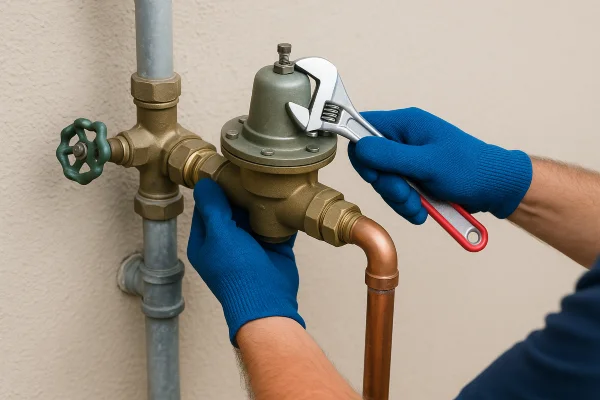
An accessible, functioning backflow device commonly takes about 30 to 60 minutes to isolate, test, record, and restore. You may notice a brief interruption at irrigation valves or exterior hose connections while shut-offs are closed. A device in a vault, with seized handles or a pressure regulator that will not hold, can extend the visit to two to four hours or require a follow-up after parts arrive.
Quiet stretches during the appointment are not idle time. The tester is letting pressure stabilize, watching the gauge for a slow drop, moving water through each check, and recording readings at the test cocks. Delays usually come from debris in a valve, a leaking shut-off, inaccessible lids, or a failed reading that needs confirmation after cleaning. The water remains off only as long as isolation and measurements require.
THE PFLUGERVILLE PLUMBER
2401 Pecan St, Pflugerville, TX 78660
(512) 592-7789
Hours of Operation
Open 24 Hours